显示标签为“weather”的博文。显示所有博文
Hot Temperature Safety. Click to learn more...With the arrival of peak Summer temperatures in Southern California, the Los Angeles Fire Department suggests that you:
  • Minimize the risks of hot weather.
  • Prepare your household, pets and workplace.
  • Plan to get relief from and avoid the effects of heat.
Plan to wear loose, lightweight and light-colored clothing that covers as much of your skin as practical, and a well-ventilated hat with a wide brim - or carry an umbrella. Wear plenty of sunblock and stay in the shade whenever possible.

Adjust your attire and activities to limit heat exposure and exertion!

Water is normally the best drink during hot weather, and you'll need more than you think. If you have a medical condition or are under a doctor's care, consult with a Physician to determine what is best for you.

Drinks with alcohol or caffeine can make the heat's effects on your body worse. Avoid salt tablets unless directed by a doctor, and plan on eating light, healthy meals.

Key Rules: Drink plenty of water before you become thirsty and rest in the shade before you become tired!

If you feel ill, tell someone immediately. Symptoms of dehydration and heat illness may include dizziness, fatigue, faintness, nausea, muscle cramps, headache and vomiting.

Many heat emergencies occur to people exercising, working or staying alone. Use a buddy system and check on elderly, disabled or at-risk neighbors on a regular basis. If you suspect someone is experiencing a medical emergency from extreme heat exposure, call 9-1-1.

If your home does not have air conditioning, consider a cool place to visit or stay during the hottest part of the day.

Schools, libraries, theaters, shopping malls and community facilities such as senior centers and parks may offer an air-conditioned refuge. To find the status and location of a cooling center in the Greater Los Angeles area, call 2-1-1.

Pets, horses, and livestock are also susceptible to hot weather. See that the special needs of your animals are met, including copious shade and plenty of cool water.

Learn more about hot weather safety at:

emergency.cdc.gov/disasters/extremeheat


Submitted by Brian Humphrey, Spokesman
Los Angeles Fire Department
READ MORE - Firefighters Stress Hot Weather Safety in Los Angeles
The Los Angeles Fire Department (LAFD) experienced its busiest day of the year yesterday, Sunday March 20, 2011. Firefighter dispatchers handled a total of 3,750 calls during the 24 hour period, the average is 2,255. Resources were dispatched on 1,748 emergency 9-1-1 incidents, this is a 62% increase over our daily 9-1-1 average, which hovers just over 1,000. These statistics are compiled from the Operations Control Dispatch Battalion Chief, and are from the hours of on 03/20/11 to the following day.
LAFD Directs Motorists From Danger
The increased call load can be attributed to severe rain and wind from the storm experienced in the Los Angeles area yesterday. Surprisingly, the Los Angeles Marathon, also taking place on this day, did not contribute to a large increase in the LAFD call load. Our emergency medical transports held steady at 534, compared to our daily average of 520.

Weather related incidents included:

Debris Flow: 18
Flooding: 212 (4000% increase above average)
River Rescue: 1
Electrical Utility: (wires down, transformer, power pole): 199 (3500% increase above average)
Traffic Collision: 192 (102% increase above average)

The LAFD also utilized our Community Emergency Response Teams (CERT). The CERT volunteers relieved firefighters from non-emergency tasks such as, “stand-by” for fallen trees and wires down. We are proud of our CERT volunteers who are ever-ready and willing to assist the LAFD and the citizens of Los Angeles in any way possible during times of need.

The LAFD was forced to “triage” the many flood related incidents and sent resources to only the most serious, with potential life or property loss.

Your Los Angeles Fire Department will continue to respond to the many emergency and non-emergency needs of its residents, always striving to provide the best possible service and care at all times.

Submitted by Erik Scott, Spokesman
Los Angeles Fire Department
READ MORE - LAFD Handles Busiest Day of the Year
Flood of June 2006As National Flood Safety Awareness Week comes to a close, and with storms on the way, we remind you to make sure that you and your loved ones are ready. Los Angeles Firefighters urge storm preparedness and encourage you to watch for flash floods and debris flows near recent burn areas.

Check out these links for more information...

Visit the EDIS website or listen to NOAA Radio for the latest emergency information and weather.

FEMA and the National Weather Service are providing tips and information to help you prepare for flooding dangers during the week and throughout the spring season. The resources can be accessed at the Flood Safety Awareness Week website.

Also you can learn more about what you should do before, during and after a flood from MySafe:LA or check out seasonal flood risks at FloodSmart.gov.

Submitted by Erik Scott, Spokesman
Los Angeles Fire Department
READ MORE - Prepare for Springtime Flooding
With the resumption of seasonal rain, the Los Angeles Fire Department is encouraging local residents to take the precautions necessary to protect themselves from injury and their property from storm damage.

When rainstorms impact the Los Angeles area, flood control channels, rivers, and arroyos can quickly fill with fast-moving water, creating a potentially life-threatening danger to anyone who gets caught or swept away. It is against the law to be inside a flood control channel in Los Angeles, regardless of the weather.

We urge you to visit the EDIS website and listen to NOAA Weather Radio or local radio and television stations for the latest weather or emergency information.

FLOOD PREVENTION AND PREPAREDNESS TIPS:
  • Ensure that all drains, gutters and downspouts are functioning properly. This is especially important for flat-roofed buildings.
  • Keep ground-level drains and drainage areas (ditches, swales, small channels) free of debris.
  • Move valuable or easily damaged items away from low-lying areas that may be prone to flooding.
  • Identify and collect important documents that you may require in case of evacuation.
  • Contact your insurance agent to assure that your flood and storm coverage is adequate and in effect. Confirm the 24-hour contact, policy and claim numbers for your insurer(s). Place that information in your cell phone and a printed copy in the glove box of your car.
  • Review your Family Emergency Plan and prepare an Emergency Supply Kit that includes food, water, medications, flashlight, battery-powered radio, rain gear and first aid supplies.
  • Plan for the needs of pets at home and if you are evacuated.
  • Check your car's wipers, lights, tire inflation and tread wear to assure safe operation, and keep your vehicle fueled in case power is cutoff to local fueling stations.
  • Identify the safe routes from your home or workplace to high ground.
  • Establish out-of-state family contacts so that friends and relatives can determine your location and status.
  • If necessary, consult an engineer or licensed contractor to design or build permanent water and debris control systems for your property.
  • Landscape slope areas with plants that are fire retardant and suitable for erosion control.
  • Keep sandbags, plywood, plastic sheeting, lumber, hand tools and other materials handy for addressing stormwater issues.

WHAT IF YOU NEED SANDBAGS?

TIPS FOR PERSONAL SAFETY DURING A FLOOD:
  • Avoid the urge to sightsee. Remind all household members not to play or linger near flood control channels and storm drains.
  • Do not walk through flowing water. Drowning is the number-one cause of flood deaths, mostly during flash floods. Currents can be deceptive; six inches of moving water can knock you off your feet.
  • Do not drive through a flooded area. More people drown in their car than anywhere else. Do not drive around road barriers; the road or bridge may be washed out.
  • If you become stranded in your car, stay with your vehicle and move to the hood or roof if water continues to rise.
  • Stay away from power lines and electrical wires. A common flood killer is electrocution. Electrical currents can travel through water.
  • Report downed power lines in the City of Los Angeles to the Department of Water and Power (800-DIAL-DWP) or emergency officials.

WHAT SHOULD YOU DO IF YOU FALL IN MOVING WATER?
  • Avoid getting into this dangerous situation.
  • Remain calm. Don't waste energy yelling for help after someone has spotted you.
  • Get ready to be rescued.
  • Try to float on your back with your legs straight and your feet pointed downstream.
  • Use your legs to shove yourself away from obstructions.
  • Keep your head up so that you can see where you are going.
  • Watch for obstacles and debris! If a tree or other stationary object is blocking the channel, forcing water over it, try to flip over on your stomach and approach the obstacle head-on, crawling over the top of it.
  • Most victims in swift water die when they get pinned against obstacles, or get trapped in submerged debris and vegetation.

WHAT IF YOU SEE SOMEONE FALL INTO MOVING WATER?
  • Do not go into the water after the victim.
  • Do not try to pull the victim out with your hands, rope, or similar device. Do not attach anything to yourself and toss it to a victim in the water. The force of the current will pull you in.
  • If possible, throw a floatation device to the victim, such as a boogie board, styrofoam ice chest, basketball, or other unattached object.
  • Immediately call 9-1-1.
  • Tell the 9-1-1 operator that someone fell into the channel and is being swept downstream. Say that swift water rescue teams need to respond.
  • Give accurate information about where and when you saw the victim and what the victim was wearing.
  • Though members of your Los Angeles Fire Department are specially trained and equipped to respond to water rescues, not every victim survives. We therefore remind you that when it comes to swift moving water: 'Stay Away and Stay Alive!'

WHAT IF YOU WITNESS STORM DAMAGE?
    City of Los Angeles residents should call 3-1-1 or (866)4-LACITY to report potholes, downed street trees, inoperative traffic signals, clogged street drains and any storm-related property damage requiring an inspection or action by City of Los Angeles officials.

WHAT IF YOU EXPERIENCE STORM DAMAGE?
    If despite your best efforts, you become a victim of storm or floodwater damage, please visit LAFD.ORG for helpful recovery tips.


Submitted by Brian Humphrey, Spokesman
Los Angeles Fire Department
READ MORE - Los Angeles Firefighters Urge Storm Preparedness
Though your home and contents may look beyond hope after a flood or mudslide, many of your belongings can be restored. If you do things right, your flooded home can be cleaned, dried out, rebuilt and reoccupied sooner than you think!

Play it safe. The dangers are not over when the water goes down. Your home's foundation, walls or ceilings may have weakened, the electrical system may have suffered damage - or floodwaters may have left behind things that can make you sick!

The Nine Steps of Flood Recovery:

Step 1. Take Care of Yourself First

    Protect yourself from stress, fatigue and health hazards. If you need food, clothing, shelter or referral to health care and social services call 2-1-1. To determine if you are eligible for federal government assistance visit DisasterAssistance.gov. To contact specific agencies:

Step 2. Give Your Home First Aid

    If evacuated, return home only when authorities indicate it is safe to do so. Dangers do not end when floodwaters recede. Once you're certain its safe to go back in, protect your home and contents from further damage. Always wear appropriate safety gear such as boots, gloves and goggles - and don't hesitate to ask for help!

Step 3. Get Organized

    Document every loss and expense. Take photos, keep receipts and contact your Insurance Agent. Some things are not worth repairing and other things may be too complicated or expensive to do by yourself. A recovery plan can take these things into account and help you make the most of your time and money.

Step 4. Dry Out Your Home

    Floodwaters damage materials, leaving mud, silt and contaminants that can promote the growth of mold. You need to thoroughly dry your home to reduce these hazards and the damage they cause.

Step 5. Restore the Utilities

    Your work will be much easier if you have heat, electricity, clean water, and sewage disposal. We suggest these services be inspected and safely restored only by on-site utility workers, as quickly as possible.

Step 6. Clean Up

    Official documents and family treasures can often be preserved with special care. Throw away food, including canned goods contaminated by flood water. Any flooded part of your home or household item that contacted floodwater should be thoroughly washed and disinfected. When in doubt, throw it out! Don't risk injury or infection.

Step 7. Check on Financial Assistance


Step 8. Rebuild and Floodproof

    Take your time to rebuild correctly and make improvements that will protect your building from the next flood. Don't rush into settlements or contracts. Get bids and opinions only from reputable, established firms willing to provide clear proof of licensure, training and insurance. Don't hesitate to ask for multiple references and inspect previous work.

Step 9. Prepare for the Next Flood


We trust these Nine Steps of Flood Recovery will help you recover quickly and safely. If there is additional assistance that your firefighters can provide, please visit your Neighborhood Fire Station or call us via 3-1-1.

Submitted by Brian Humphrey, Spokesman
Los Angeles Fire Department
READ MORE - The Nine Steps of Flood Recovery
September 2007 mudslide in Los Angeles. © Photo by Mike Meadows. Click to view more...The Los Angeles Basin is periodically subject to floods that result in property damage. The potential for mudslides and debris flow is greatly increased near areas recently impacted by wildfire.

Los Angeles residents - especially those in foothill communities, are encouraged to prepare their properties in advance of coming rainstorms.

In an effort to help, the Los Angeles Fire Department is making ready-to-fill sandbags available at all Neighborhood Fire Stations.

Additionally, both sand and sandbags are available at many convenient Bureau of Street Services locations.


Properly filled and placed sandbags are best used to divert (rather than dam) water run-off, redirecting storm and debris flow away from property improvements.

While the City can provide homeowners with empty sandbags and sand to protect their property, the City does not fill, load, or place sandbags for individual homeowners.

Those needing additional sand, sandbags and supplies may wish to contact a home improvement store or building supply center in their community, many of which will deliver flood preparedness and debris control aids.

We remind you that sandbagging and flood control is a labor intensive process that can lead to injury. Please follow important safety guidelines and consider hiring a licensed contractor for any large or special needs.


2009 San Fernando Valley Foothill Community
Predicted Mud & Debris Flow Maps
*

Homeowner's Guide to Erosion Control


*most recently published document

Submitted by Brian Humphrey, Spokesman
Los Angeles Fire Department
READ MORE - LAFD Provides Sandbags for Homeowners
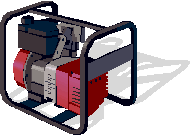
Portable Electric GeneratorWith weather conditions having a seasonal impact on energy supplies, many people are turning to portable electric generators as a source of temporary electricity for their homes.

If improperly installed or operated, a portable electric generator can become deadly due to electrical shock and carbon monoxide fumes.

Using a generator indoors CAN KILL YOU IN MINUTES!

Firefighters encourage you to contact a licensed electrician to install your generator to make sure it meets all local codes. Never connect a generator directly to household wiring without an appropriate transfer switch installed and be sure to notify your utility, which may be required by State Law.

Power from generators connected directly to household wiring can backfeed along power lines and electrocute anyone coming in contact with them, including lineworkers making repairs.

The Los Angeles Fire Department reminds you:
  • Generators can produce high levels of carbon monoxide (CO) very quickly, which can be deadly. Each year, more than 400 Americans die from unintentional CO poisoning.
  • Never operate your generator in an enclosed or partially enclosed space such as a patio or garage, and place it far, far away from any structure housing people or pets. Most of the serious carbon monoxide poisonings handled by Los Angeles Firefighters have been caused by generator exhaust fumes drifting into doors, windows, vents and crawl spaces.
  • Be certain to install and test carbon monoxide detectors in nearby enclosed areas whenever you operate a portable power generator.
  • Read the owner's manual thoroughly and make sure your generator is properly grounded and maintained.
  • Store fuel for your generator safely. Turn the motor off and let it cool before refueling.
  • Keep the generator dry, and make sure extension cords are rated for the load, free of cuts and worn insulation and have three-pronged plugs.
  • Do not overload the generator. A portable generator should be used only when necessary and only to power essential equipment or appliances
  • Use a ground fault circuit interrupter (GFCI) to help prevent electrocutions and electrical shock injuries
  • Turn off all appliances powered by the generator before shutting down the generator
  • Keep children away from portable generators at all times!

Remember: Electricity is a powerful tool, and odorless carbon monoxide fumes can quickly lull you to deep and deadly sleep!


Submitted by Brian Humphrey, Spokesman
Los Angeles Fire Department
READ MORE - Firefighters Stress Portable Generator Safety
Click to learn more about portable electric heater safety...With temperatures diminishing across the nation, many Americans are using portable electric heaters.

While they can be an efficient way to warm a room or supplement central heating, portable electric heaters can also be a fire or electric shock hazard if not used properly.

The Los Angeles Fire Department joins the Association of Home Appliance Manufacturers (AHAM) in encouraging the safe use of portable electric heaters:

  • Read the manufacturer's instructions and warning labels before using your heater.
  • Never leave an operating heater unattended and always unplug the heater when not in use.
  • Unplug the heater by pulling the plug straight from the outlet. Inspect the power cord regularly, and never use a heater with a damaged cord.
  • Check periodically for a secure plug/outlet fit. If the plug does not fit snugly into the outlet or if the plug becomes very hot, the outlet may need to be replaced. Check with a qualified electrician to replace the outlet.
  • Do not use a power strip or extension cord to power your heater. Overheating of the power strip or extension cord could result in a fire.
  • Do not plug any other electrical device into the same outlet as your heater. This could result in overheating.
  • String the included power cord above any rug or carpeting. Anything you place on top of a cord - including furniture, may damage it.
  • Keep combustible materials such as furniture, pillows, bedding, papers, clothes, curtains, paint, gas cans and matches at least three feet from the front of the heater and away from the sides and rear. Do not block the heater's air intake or outlet.
  • Unless the heater is designed for outdoor use or in bathrooms, do not use in damp or wet areas. Parts in the heater may be damaged by moisture.
  • Place the heater on a level, flat surface. Only use a heater on tabletops when specified by the manufacturer.
  • Heaters should be kept away from pets and children and never used in a child's room without adult presence.
  • Seniors, the disabled, those living alone or in student housing may be at increased risk due to careless or improper use of heaters. If you know someone in this risk category, please share this safety list and your concerns.

To learn more, listen as FDNY Lieutenant Anthony Mancuso discusses portable electric heater safety:

...and describes how you can receive AHAM's free "Stay Safe!" brochure, by calling (888) 785-SAFE or visiting:

www.heatersafety.org


Submitted by Brian Humphrey, Spokesman
Los Angeles Fire Department
READ MORE - 12 Point Checklist for Portable Heater Safety
Click to learn more about local winds and weather...With the arrival of seasonal winds, the Los Angeles Fire Department reminds Southern Californian's to use caution at home, in the workplace and on the road.

Strong winds compound wildfire danger. We therefore ask residents - especially those in foothill and wildland communities, to use caution with flame, heat and spark producing equipment, including vehicles, barbecues and power tools.

Those living near flammable vegetation should remain vigilant to the possibility of brush or structure fires, and report nearby smoke and flames immediately to 9-1-1.

Additional preparation, such as a fire safety survey of your property and a review of household emergency and neighborhood evacuation plans can help remove the apprehension that many of us feel when winds begin to blow.

With the possibility of downed power lines causing local power outages, drivers should use extreme caution when approaching darkened traffic signals. Whether driving on a main thoroughfare or a side street, motorists should treat all non-functioning traffic signals as a four way stop.

If you encounter downed wires, assume them to be energized and potentially lethal. Be careful that such wires haven't electrically charged puddles of water, chain link fences or other conductive sources.

In many circumstances, but especially during high winds, firefighters discourage the use of candles, lighters, fire pits and fuel-powered lanterns.

Now is a good time to fully charge your cell phone, check your flashlights, portable radios and spare batteries. Place these items strategically, and make sure others know how to find them. Before you activate a portable generator, make certain you know how to use it legally and safely.

And finally, please take a moment now to secure household items, such as outdoor furniture, that could cause harm or damage if catapulted by a wind gust, and to remove flammable items from around your home.

When outdoors, be careful for toppling trees, wind-blown debris or high profile vehicles buffeted by turbulent wind. If you must get behind the wheel, Los Angeles Firefighters remind you: "Heads Up, Easy on the Throttle and Expect the Unexpected!"


Submitted by Brian Humphrey, Spokesman
Los Angeles Fire Department
READ MORE - Los Angeles Firefighters Offer Wind Safety Tips
On Thursday, September 30, 2010 at 3:56 PM, 4 Companies of Los Angeles Firefighters, 8 LAFD Rescue Ambulances, 3 EMS Battalion Captains, 2 Battalion Chief Officer Command Teams, 1 Division Chief Officer Command Team, under the direction of Battalion Chief John Miller responded to a Mult-Patient Medical Incident at 6201 North Winnetka Avenue in Woodland Hills.

Firefighters arrived at Pierce College, where 800 students and coaches gathered from multiple High Schools for a cross country track meet. Due to intense physical exertion and extreme temperatures, 12 suffered heat related illnesses. Most of those evaluated by Firefighter/Paramedics, were athletes. In addition to providing emergency medical care, a total of 45 Firefighters scoured the three mile track to ensure no runners had fallen ill and were left behind. In all, ten females that were 16 to 17 years-old, required transportation to various local hospitals. Medical complaints were predominately minor in severity, however two patients suffered temporary altered-level-of-consciousness. The incident lasted just under two hours.

The Los Angeles Fire Department stresses the importance of staying hydrated and not exercising alone, especially during extreme temperatures.

Submitted by Erik Scott, Spokesman
Los Angeles Fire Department
READ MORE - Cross Country Runners Hospitalized From Heat Injuries
How are decisions made by the Los Angeles Fire Department to pre-deploy resources on days of high wildfire hazard?

The answer is science.

The LAFD utilizes a Burning Index (BI) to determine the Department’s commitment to pre-deploy resources. A number of procedures occur daily to determine the BI:

First, fuel moisture readings are taken at Fire Station 108 on Mulholland Drive, and communicated to the Division 3 office located at Fire Station 88 in the San Fernando Valley.

These fuel moisture readings are matched with predicted fire weather information (i.e. high/low temperatures, humidity, wind speed and direction) provided by a group of federal meteorologists at the Fire Weather Center (FWC) in Riverside, California.

This inter-agency group composed of California Department of Forestry & Fire Protection, Bureau of Land Management, the Forest Service and the California Emergency Management Agency, provides the data necessary for Los Angeles Firefighters to determine the Daily Fire Rating and local pre-deployment of resources.

Along with real-time weather surveys conducted by LAFD Division 3 personnel, the National Weather Service (NWS) web site is used to monitor current fire weather conditions in and near the City of Los Angeles.

National Weather Service information may be different from that provided by the Fire Weather Center. The National Weather Service may indicate a Red Flag Warning, whereas the FWC indicates a lesser rating i.e. Extreme or Very High.

When the National Weather Service and FWC information do not match, real time weather surveys and long-term predictions gain importance, as they are considered the best predictor of fire weather conditions in the City of Los Angeles.

The daily BI-levels are stated as a numerical value:

BI 0 to 37 = Low
BI 38 to 47 = Moderate
BI 48 to 110 = High
BI 111 to 161 = Very High
BI 162 to 211 = Extreme
BI 212 and above = Critical

Red Flag Alert days occur simply when the wind speed is 25 miles per hour or more and the relative humidity is 15% or less.

A red flag warning means that critical fire weather conditions are either occurring now... or will shortly. History has proven that a combination of strong winds, low relative humidity and warm temperatures will create explosive fire growth potential.

On Extreme, Critical and Red Flag Alert days the Los Angeles Fire Department pre-deploys resources into select Neighborhood Fire Stations serving brush areas. The specific stations/locations selected for pre-deployment are based on fire experience, area access and fire potential.


To determine current Red Flag Parking Restrictions within the City of Los Angeles, please call 3-1-1 or visit:

lafd.org/redflag


Submitted by Brian Humphrey, Spokesman
Los Angeles Fire Department
READ MORE - The Science Behind LAFD Fire Weather
Click to learn more about today's weather...
With unseasonally hot weather this week, don't underestimate the heat or overestimate your abilities!

The Los Angeles Fire Department encourages you to stay safe during a heat wave by following the links below - and sharing these hot weather safety tips with your family and friends:

Submitted by Brian Humphrey, Spokesman
Los Angeles Fire Department
READ MORE - LAFD: Heat Safety Messages Worth Repeating
Weather Watches and Warnings...You've heard and seen weather warnings, er.. watches - or were they advisories?

When it comes to emergency management and your safety, words have meaning. That's why the Los Angeles Fire Department suggests you become familiar with the terms used to identify severe weather conditions.

Advisories, Watches and Warnings are not synonymous!

Watch:
A watch is used when the risk of a hazardous weather or hydrologic event has increased significantly, but its occurrence, location, and/or timing is still uncertain. It is intended to provide enough lead time so that those who need to set their plans in motion can do so.

Advisory:
An advisory highlights special weather conditions that are less serious than a warning. They are for events that may cause significant inconvenience, and if caution is not exercised, could lead to situations that threaten life and/or property.

Warning:
A warning is issued when a hazardous weather or hydrologic event is occurring, is imminent, or has a very high probability of occurring. A warning is used for conditions posing a threat to life or property.

By remembering to look or listen for such key words, you can take appropriate action to keep yourself and those you love safe from foreseeable danger.

To learn more about weather in our region, visit the National Weather Service Los Angeles/Oxnard Weather Forecast Office at:

www.wrh.noaa.gov/lox


...and, remember to tune to NOAA Weather Radio, commercial radio or television stations for information whenever severe weather threatens!

Submitted by Brian Humphrey, Spokesman
Los Angeles Fire Department
READ MORE - Watches and Warnings - Do You Know The Difference?
Children, Hot Weather and Cars = Danger. Click to learn more...During hot weather - and throughout the year, the Los Angeles Fire Department asks you to consider some important safety tips for vehicles and children.

We need your help to make sure that no child dies needlessly by being left alone in a hot vehicle.


  • Always put something you'll need - such as your phone, handbag, a sunshade, lunch or briefcase on the floor in the back seat. This will make you open the back door of your vehicle every time you reach a destination. This way, making sure no child is left behind becomes a habit. Safety experts call this the 'Look...Then Lock' campaign.
  • Keep a large teddy bear in the child's car seat when it’s not occupied. When the child is placed in the seat, put the teddy bear in the front passenger seat. It's a great visual reminder that anytime the teddy bear is up front, a child is secured in a child safety seat behind you!
  • Make arrangements with your child’s day care center or babysitter that you will always call them when your child will not be there on a particular day as scheduled. This is not only common courtesy, but makes sure everyone involved in the care of your child is informed of their whereabouts. Ask these caregivers to always phone you if your child doesn’t show up when expected.
  • If you see a child (dependent adult or pet) alone in a hot vehicle, get involved. If they are hot or seem sick, get them out as quickly and safely as possible. Call 9-1-1 or your local emergency number for assistance as necessary.
  • Never leave your car keys where children can access them, and always make sure your car is locked so that children cannot get in without adult supervision.
  • Do not underestimate a child's capabilities. Teach your children about the dangers of a car, especially the car trunk. Most children can differentiate between a tool and a toy. Make certain they know that a car is not a toy!
For additional information about child and vehicle safety:
Please share this information with your friends and family!

Submitted by Brian Humphrey, Spokesman
Los Angeles Fire Department
READ MORE - Children, Hot Weather & Cars = Danger!
National 'All Hazards' Weather Radio (NWR) is a nationwide network of NOAA radio stations broadcasting continuous information directly from the nearest National Weather Service office.

NWR broadcasts official Weather Service warnings, watches, forecasts and other hazard information 24 hours a day, 7 days a week.

Working with the Federal Communication Commission's Emergency Alert System, NWR is an all hazards radio network, making it an important source of local weather and emergency information.

In conjunction with public officials, NWR also broadcasts warning and post-event information for all types of hazards – including natural (such as earthquakes or avalanches), environmental (such as chemical releases or oil spills) and public safety (such as AMBER alerts or 911 Telephone outages).

Known as "The Voice of NOAA's National Weather Service", NWR is provided as a public service by the National Oceanic and Atmospheric Administration (NOAA), part of the Department of Commerce, and covers all 50 states, adjacent coastal waters, Puerto Rico, the U.S. Virgin Islands, and the U.S. Pacific Territories.

NWR requires a special yet inexpensive radio receiver that can be purchased at an electronics retailer near you. You can also listen via scanner radio on one of seven frequencies (MHz):
  • 162.400
  • 162.425
  • 162.450
  • 162.475
  • 162.500
  • 162.525
  • 162.550 
For additional information, visit:


Submitted by Brian Humphrey, Spokesman
Los Angeles Fire Department
READ MORE - Have You Heard of NOAA 'All Hazards' Radio?
On Friday, January 22, 2010 at 11:19 AM, 7 Companies of Los Angeles Firefighters, 3 LAFD Rescue Ambulances, 1 Heavy Rescue, 2 Helicopters, 1 EMS Battalion Captain, 1 Battalion Chief Officer Command Team, 1 Division Chief Officer Command Team, 2 Swift Water Rescue Teams under the direction of Assistant Chief Tim Manning responded to a River Rescue at 385 Los Angeles River in the Industrial Eastside area.

When 9-1-1 callers reported a dog in distress within the Los Angeles River and the possibility of someone jumping into the waters to rescue it, sixty LAFD firefighters from across a broad expanse sprang quickly into action on the ground and in the air. Firefighter/Dispatchers queried callers to determine that this 3 year-old German shepherd mix was trapped in frigid fast-moving water and the LAFD wanted the rescue to take place from trained professionals rather than well intentioned individuals that can all-too-easily become victims.


Due to recent severe weather, local flood control channels remain swelled with storm-water, causing the Los Angeles Fire Department to remain in a "River Rescue" preparedness status. Members were strategically pre-deployed to a helipad at Piper Tech, where historically many rescues have taken place, providing a short distance to the LA River. At 1119 hours they were dispatched along with ground swift water rescuers to join the Vernon Fire Department in this recovery.

Due to the fast moving water and the steep embankment, the dog was unable to climb out. Once the canine moved from the side of channel to the center, swift water rescue teams were at a disadvantage to reach him, thus the decision was made by Commanders to deploy firefighters from a helicopter in a hoist operation.

Firefighter Joe St Georges was lowered into the rapids and quickly made his way to the dog and despite being continually bit, held on to the frightened pooch as they were lifted to safety.

The helicopter flew a short distance to a nearby bridge, where it landed to transfer the German Shepherd, now nicknamed Vernon, to the care of ground-based LAFD firefighters that offered comfort and provided medical evaluation.

Vernon is being quarantined for observation (routine after a bite) at S.E.A.A.C.A. Animal Shelter and Firefighter St Georges received a bite wound to his hand and various punctures on his arms. Joe was treated and released at USC medical center.
© Photo by Mike Meadows. Click to view more...

The LAFD wishes to remind citizens that when rainstorms impact the Los Angeles area, flood control channels, rivers, and arroyos can quickly fill with fast-moving water, creating a potentially life-threatening danger to anyone who gets caught or swept away. Please keep all animals under supervision and remember it is against the law to be inside a flood control channel in Los Angeles, regardless of the weather.

Thanks to all the firefighters involved and due to their bravery and continual training, this incident had a successful outcome.

After an abundance of requests across the nation to provide cards of thanks and donations, the following address is provided: 200 N Main Street, Los Angeles, CA 90012. LAFD Administration, Attn.: Dog Rescue.

Submitted by Spokesman Erik Scott
Los Angeles Fire Department
READ MORE - LAFD Heroically Rescues Canine from LA River
EDIS - Emergency Digital Information Service
The Los Angeles Fire Department relies on EDIS.

So does the National Weather Service. In fact, hundreds of public safety agencies and public service organizations across The Golden State depend on EDIS.

What is EDIS?

EDIS is the 'Emergency Digital Information Service' from the California Emergency Management Agency. EDIS delivers official information about emergencies, disasters and hazardous conditions to those with a need to know.

Floods, Storms, Earthquakes, Fires, Tsunamis, Civil Unrest...

EDIS directly notifies broadcasters of important events. You can also receive this information directly, free of charge, at the same time it is sent to local newsrooms.

To access EDIS, visit LAFD.ORG and click on 'EDIS - California Statewide Emergency Bulletins' or bookmark the EDIS Home Page at:

edis.oes.ca.gov


The LAFD reminds you: during an emergency, knowledge is power!


Submitted by Brian Humphrey, Spokesman
Los Angeles Fire Department
READ MORE - California Officials Ask: Do You EDIS?
As we enter the peak of wildfire season in Southern California, the increasing danger of vegetation fire is apparent.

Both Regional and Local...

To assist you in preparing for this cyclical nemesis, the Los Angeles Fire Department is pleased to share regional Fire Weather reports issued twice daily by the National Weather Service:

bit.ly/FireWx

We remind you that the regional reports mentioned above are completely separate from any local declaration that may enact special Red Flag Parking Restrictions in the City of Los Angeles.

How Danger is Determined...

To remain vigilant, Los Angeles Firefighters continuously analyze the relationship between factors of the "Fire Environment Triangle".

The balance or imbalance of: ...will dictate the fire hazard for a geographic region. Within such regions, local agencies - such as the Los Angeles Fire Department, may independently assess wildfire danger and enact local programs and restrictions.

You Can Help...

While terrain is readily assessed, and many fuels are properly managed by our annual Brush Clearance Program, the men and women of the LAFD ask you to remain cognizant of fire weather and Red Flag Parking Restrictions.

Your personal awareness of overall wildfire danger, combined with preventive actions and wildfire preparedness are key to our collective survival of brush fires.


Submitted by Brian Humphrey, Spokesman
Los Angeles Fire Department
READ MORE - Fire Weather Forecast For Los Angeles

Blog Archive