显示标签为“poisoning”的博文。显示所有博文
That's right, the Los Angeles Fire Department has often warned of the dangers of the "silent killer," Carbon Monoxide (CO). Now, we are here to tell you that as of July 1, 2011, the State of California requires Carbon Monoxide detectors in most single family homes - and soon in every residence. This new law is to be enforced by the City of Los Angeles, Housing Department.

Carbon Monoxide is the leading cause of unintentional poisoning deaths in America, claiming more than 400 lives each year. CO is an odorless, tasteless and invisible gas that can lead to brain damage and even death. CO is produced whenever fuel such as gas, oil, kerosene, wood or charcoal is burned - and can be produced by common household appliances. Sources of CO poisoning can include:

· Gas water heaters
· Home heating systems
· Kerosene space heaters
· Grills, hibachis or portable gas camp stoves
· Idling motor vehicles
· Cigarette smoke
· Propane-fueled forklifts
· Gas-powered concrete saws
· Indoor tractor pulls
· Swimming behind a motorboat
· Spray paint, solvents, degreasers, and paint removers
· Portable Generators

It is not uncommon for your firefighters to respond to accidents that involve CO poisoning during the winter months, as people often burn various fuels and use appliances as a source of heat. However, we often respond to these accidents during the summer months as well.

There is some good news...these accidents are preventable. Please take the necessary steps to ensure proper ventilation around any appliance that may generate this toxic gas, use a little common sense and get your CO detectors today. Remember, once installed, these alarms should be tested monthly, just as with your (already installed) smoke alarms. It is important to note, these do not replace your traditional smoke alarms! There are, however, some units available that will serve a dual function and provide protection against both.

Carbon Monoxide detectors are affordable, widely available at most home improvement/hardware stores and now... in California they are required by law!

For more information and some helpful tips on the dangers of Carbon Monoxide, read a previous post on our blog: "Carbon Monoxide, the 'Silent Killer".


Submitted by Matt Spence, Spokesman
Los Angeles Fire Department
READ MORE - Carbon Monoxide Detectors - Safe, Affordable and Now...THE LAW!
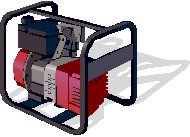
Portable Electric GeneratorWith weather conditions having a seasonal impact on energy supplies, many people are turning to portable electric generators as a source of temporary electricity for their homes.

If improperly installed or operated, a portable electric generator can become deadly due to electrical shock and carbon monoxide fumes.

Using a generator indoors CAN KILL YOU IN MINUTES!

Firefighters encourage you to contact a licensed electrician to install your generator to make sure it meets all local codes. Never connect a generator directly to household wiring without an appropriate transfer switch installed and be sure to notify your utility, which may be required by State Law.

Power from generators connected directly to household wiring can backfeed along power lines and electrocute anyone coming in contact with them, including lineworkers making repairs.

The Los Angeles Fire Department reminds you:
  • Generators can produce high levels of carbon monoxide (CO) very quickly, which can be deadly. Each year, more than 400 Americans die from unintentional CO poisoning.
  • Never operate your generator in an enclosed or partially enclosed space such as a patio or garage, and place it far, far away from any structure housing people or pets. Most of the serious carbon monoxide poisonings handled by Los Angeles Firefighters have been caused by generator exhaust fumes drifting into doors, windows, vents and crawl spaces.
  • Be certain to install and test carbon monoxide detectors in nearby enclosed areas whenever you operate a portable power generator.
  • Read the owner's manual thoroughly and make sure your generator is properly grounded and maintained.
  • Store fuel for your generator safely. Turn the motor off and let it cool before refueling.
  • Keep the generator dry, and make sure extension cords are rated for the load, free of cuts and worn insulation and have three-pronged plugs.
  • Do not overload the generator. A portable generator should be used only when necessary and only to power essential equipment or appliances
  • Use a ground fault circuit interrupter (GFCI) to help prevent electrocutions and electrical shock injuries
  • Turn off all appliances powered by the generator before shutting down the generator
  • Keep children away from portable generators at all times!

Remember: Electricity is a powerful tool, and odorless carbon monoxide fumes can quickly lull you to deep and deadly sleep!


Submitted by Brian Humphrey, Spokesman
Los Angeles Fire Department
READ MORE - Firefighters Stress Portable Generator Safety
You’ve heard the reports on the news...
  • "Firefighters discover couple dead from gas heater fumes."
  • "Family found unconscious, overcome by carbon monoxide."
Carbon Monoxide (CO) is the leading cause of unintentional poisoning deaths in America, claiming more than 400 lives each year. CO is an odorless, tasteless and invisible gas that can lead to brain damage and even death.

Known as 'The Silent Killer', CO is produced whenever fuel such as gas, oil, kerosene, wood or charcoal is burned - and can be produced by common household appliances. Sources of CO poisoning can include:
  • Gas water heaters
  • Home heating systems
  • Kerosene space heaters
  • Grills, hibachis or portable gas camp stoves
  • Idling motor vehicles
  • Cigarette smoke
  • Propane-fueled forklifts
  • Gas-powered concrete saws
  • Indoor tractor pulls
  • Swimming behind a motorboat
  • Spray paint, solvents, degreasers, and paint removers


The symptoms of Carbon Monoxide poisoning can mimic the flu, and you may not be inclined to think of CO poisoning. At a low level exposure, shortness of breath, nausea and headaches are common. At a moderate level, victims experience more severe headaches, dizziness and confusion, and often become nauseated or faint. The longer the exposure to CO, the greater the chance of death.

If You Think You Have Been Exposed to Carbon Monoxide:
  • Move quickly to fresh air, away from the suspected source of exposure.
  • Seek medical care in a hospital emergency department or contact your doctor.
  • If severe, life-threatening symptoms are present, call 9-1-1.
  • Get a qualified professional to investigate and repair the source of CO.
What can you do to protect yourself?
  • Never use a grille or any type of barbecue indoors.
  • Never burn any type of charcoal indoors.
  • Have a certified technician service your home heating system each year.
  • Be careful with generators.
  • Do not allow your vehicle to idle in an enclosed space or near a door or window to your home.
  • Get a Carbon Monoxide Alarm!
Though preventing CO from becoming a problem is your best bet, Carbon Monoxide Alarms are both affordable and widely available. Do some research on alarm features and don’t select solely on the basis of high or low cost. For safety sake, please follow the DO’s and DON’Ts listed above.

Carbon Monoxide Alarms are already mandated in most newly constructed California homes, and will be required by law in most existing single family homes in California by July 1, 2011.

For additional information about Carbon Monoxide:

Submitted by Brian Humphrey, Spokesman
Los Angeles Fire Department
READ MORE - Carbon Monoxide, the 'Silent Killer'
A frantic 911 call to the Fire Dispatch:

Caller: “I want to report a snake bite.”
Dispatcher: “Where is the snake now? In the house or in the yard?”
Caller: “I don’t know. We’re in the car taking the dog to the hospital.”

All joking aside, with the decrease in rainfall and the increase of dead vegetation, animals are forced to forage for food, water and coolness in other areas – your area! Now that the weather is getting warmer, have you noticed an increase in the animal bite stories?

Animal internal mechanisms has assisted them in responding to hot, dry conditions in various ways. Obvious ways of coping with heat include seeking shade and burrowing or preferring to rest under a bush, rock or in a crevice during the cooler temperatures of the early morning or afternoon. Snakebites occur more frequently in warm weather, when people are more active outdoors. Most bites occur on the legs or feet when the animal is startled or disturbed. Most try to avoid an encounter, only biting as a last resort. Approximately 10,000 snake bites are reported each year, less than ten are fatal, yet the after effects of the poison secreted to the skin can cause scaring, tissue and/or nerve damage.

Poisonous snake bites are medical emergencies, with children at a higher risk for death or serious complications because of their smaller body size. Getting the person to an emergency room as quickly as possible is very important. If properly treated, many snakebites will not have serious effects.

TYPES OF POISONOUS SNAKES

Two families of venomous snakes are native to the United States the Pit Viper (includes rattlesnakes, copperheads and cottonmouths or water moccasins) and coral snakes. Pit Viper is derived from a small pit between the nostril and the eye on each side of its head. The bite of the Pit Viper is a lightning-fast strike, usually to the leg or hand, as the snake injects venom from its two fangs. Coral snakes inject venom by chewing on the victim. They often allow you to handle them for long periods of time before biting.

The men and women of the Los Angeles Fire Department would like to share some of the following safety tips in preparation of the "long, hot and dry summer."

  • Find out what local snakes and lizards are common to your area. Learn what they look like, whether they are poisonous, and where you are most likely to encounter them.
  • Avoid areas where snakes may be hiding -- under rocks, logs, etc.
  • Avoid picking up or handling snakes. Even with a severed head, a snake can release venom through reflexes for up to an hour after it death.
  • If you see a snake or lizard, do not disturb it. The striking range of a snake is about half of its length.
  • When hiking in an area known to have snakes, wear long pants and boots if possible.
  • Tap ahead of you with a long walking stick before entering an area with an obscured view of your feet, especially foot tall grass, weeds or small brush. Snakes will attempt to avoid you if given adequate warning.
  • If you are a frequent hiker, consider purchasing a snakebite kit (available from hiking supply stores.)

SIGNS OF A POISONOUS BITE

RECOMMENDED FIRST AID

  • Keep the person calm. Reassure them that snake bites can be treated effectively in an emergency room. Restrict the person’s movement, keeping the affected area below heart level to reduce the flow of venom.
  • Remove any rings or items that can cause constriction causing the affected area to swell. Create a loose splint to help restrict movement of the affected area.
  • Monitor the person's vital signs -- temperature, pulse, rate of breathing, and blood pressure -- if possible. If there are signs of shock (such as paleness), lay the person flat, raise the feet about a foot, and cover the person with a blanket.
  • Get medical help immediately.

DO NOT

  • Apply tourniquets
  • Apply cold compresses
  • Cut into a snake bite with a knife or razor
  • Try to suction the venom out using the mouth
  • Raise the site of the bite above the level of the person's heart

THE FOLLOWING WEB SITES CAN BE ACCESSED FOR INFORMATION

Submitted by d'Lisa Davies
Los Angeles Fire Department
READ MORE - Animals Share Our Environment

Blog Archive